

What Is DTF (Direct-to-Film) Printing? Complete Guide for Apparel Business
Share
Introduction
In the fast-moving world of custom apparel and textile decoration, new technologies keep emerging. One of the most disruptive lately is DTF printing — short for Direct-to-Film. If you’re in the business of custom t-shirts, hoodies, bags or any promotional fabric items, understanding DTF is essential. This article will walk you through what DTF printing is, how it works, and why savvy businesses are embracing it now.
What Is DTF Printing?
DTF printing is a method where your design is printed onto a special film and then transferred onto a fabric (or other suitable surface) using heat and pressure — rather than printing directly onto the fabric itself.
Here’s the basic process:
-
The design is digitally printed (including white ink if needed) onto PET or similar film.
-
An adhesive powder (hot-melt) is applied to the printed film and cured so it becomes ready for transfer.
-
The prepared film (with design + adhesive) is placed onto the garment (or other surface), heat‐pressed, then peeled. The design stays bonded to the fabric.
Why DTF Is Gaining Popularity
Here are key reasons why many print businesses prefer DTF over older methods:
-
Versatility of fabrics: DTF works on cotton, polyester, blends, leather and more, making it extremely flexible.
-
Full-colour, fine detail: Because it’s digital, gradients, photo-quality prints and many colours are possible without the complexity of traditional screen setups.
-
Low minimums: Unlike screen printing (which often requires big runs to be cost‐effective), DTF is good for one-offs or small batches.
-
Faster turnaround: With fewer setup steps (no screens), you can move from design to finished garment quicker.
-
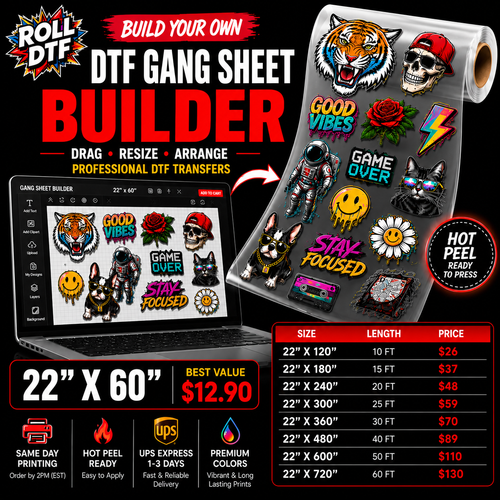
Roll / sheet options: For businesses that print lots of designs or need flexibility, roll DTF transfers enable scalable workflows.
How Roll DTF Fits In
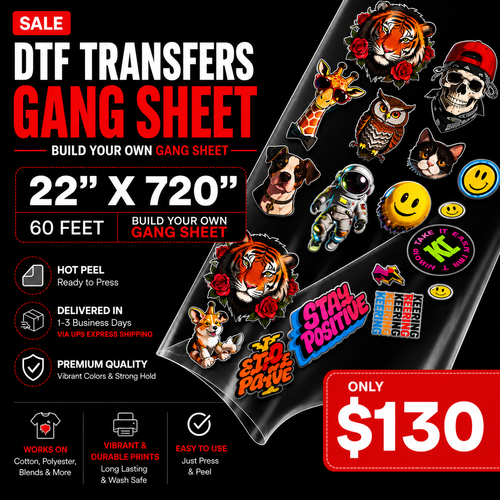
When you talk about “roll DTF”, you’re referring to DTF transfers supplied in a continuous roll format (rather than individual sheets). This is especially useful for higher volume, or when you want to cut your own sizes from the roll. Benefits include:
-
Greater efficiency and less waste when you can cut to size.
-
Ability to print gang sheets (many designs on one roll) for cost efficiency.
-
Easier inventory management: keep a roll ready, cut when you need.
Key Considerations Before You Start
If you’re thinking about adopting DTF (or roll DTF) for your business, keep in mind:
-
Equipment & materials: You’ll need a DTF printer (or transfer supplier), heat press (the correct temp/pressure/time matters), film, adhesive powder, etc.
-
Temperature, pressure, time: If any factor is off, adhesion or durability can suffer. Many resources show step-by-step methods.
-
Design preparation: Good resolution, correct colour profile, proper white ink, and mirrored images matter.
-
Fabric compatibility and testing: Even though DTF is versatile, different blends and fabric finishes may behave differently — test before full batch.
-
Care instructions for end-customers: To ensure the print lasts, you should provide washing and handling instructions (wash inside out, cold, gentle cycle, no bleach, etc.).
-
Cost & pricing strategy: While DTF lowers setup cost, you still have materials cost, film cost, powder cost, labour and press time. Compare versus other methods for your volume.
DTF printing is more than a trend — it’s a flexible, efficient, and high-quality solution for modern apparel decoration. For businesses of any size — from hobby-crafters to full print shops — understanding and leveraging DTF (especially roll DTF transfers) can give you a competitive edge. Whether you’re offering custom hoodies, retail garments, or promotional items, now is a solid time to explore how this technology can work for you.
If you’re ready to learn more about roll DTF transfers, how to choose the right film, or how to apply them for best results — stay tuned for the next posts in the series.
Have you already used DTF transfers in your business or hobby? Leave a comment below or share your experience. If you’re looking for high-quality roll DTF film, we’d love to help you get started — head over to our product page or contact us for a quote.